
A company with two employees and a company with forty buy the same product. They just buy it differently. Here is how the money moves, who qualifies, when you can actually purchase, and what happens once the plan is running.
The Short Version
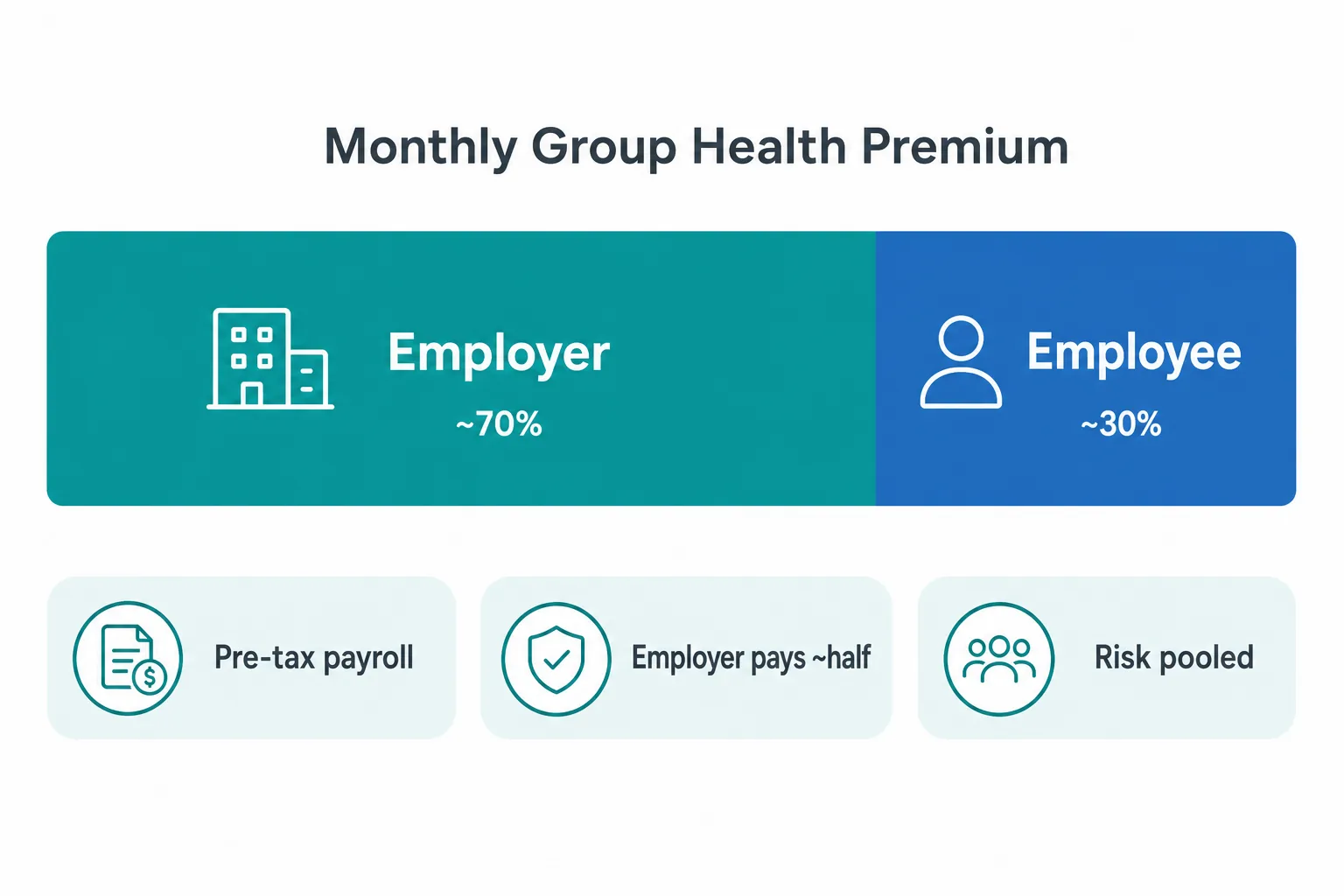
One plan, one policy, covering the owner and eligible employees under a single contract. The business buys it; employees enroll under it. The employer pays a set share of the premium, and employees cover the rest through payroll deductions.
Because the risk is spread across everyone enrolled, no single person is priced higher or turned away because of their health history. That pooling is the core difference from shopping alone, and it is why group health insurance for small business usually beats what employees could arrange individually. HealthCare.gov’s guidance for small employers outlines what generally counts as small-group coverage.
Do You Have Enough Employees? Probably Yes
Most small-group plans start at two enrolling participants. An owner plus one W-2 employee is often enough, which surprises plenty of two- and three-person businesses that assumed they were too small to ask. Health insurance for a small business with fewer than 10 employees runs on the same mechanics as a group of fifty. The Washington State Office of the Insurance Commissioner shows how regulators typically frame those eligibility rules, though specifics vary by state.
A solo owner with no employees is a different situation. Individual coverage or a reimbursement arrangement is usually cheaper and cleaner there, and that is worth saying plainly rather than pushing a group plan that does not fit.
Who Pays What
The employer contribution. Carriers typically require the employer to pay a minimum percentage of the employee-only premium. That contribution level, not the sticker price of the plan, drives your monthly cost. Two businesses can pick the identical plan and land on very different budgets.
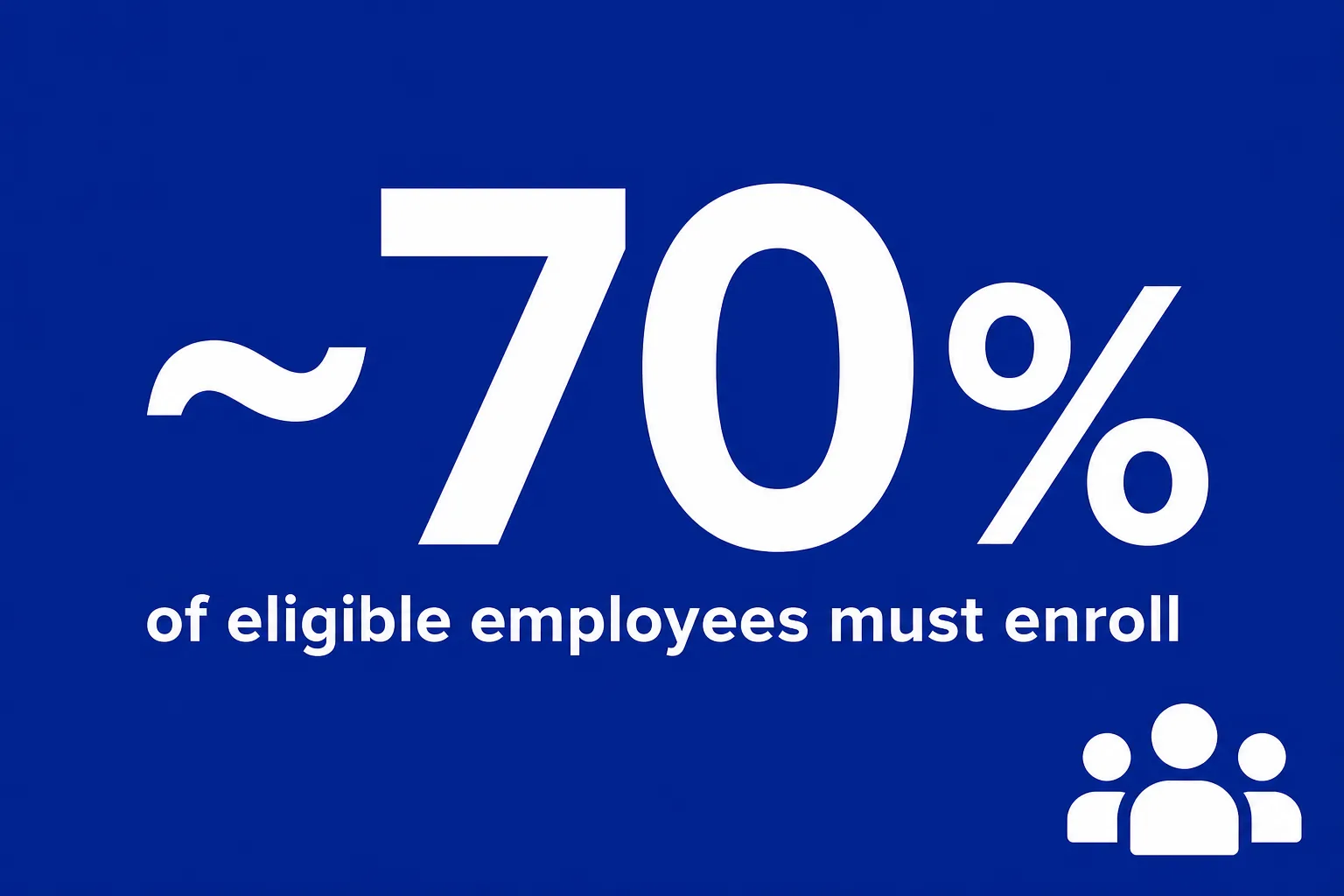
The participation requirement. A minimum share of eligible employees generally has to enroll before a carrier will issue the plan. Here is the part that trips people up: employees who waive because they have other coverage (a spouse’s plan or Medicare) are usually pulled out of that calculation entirely. It is the most misunderstood of the group health insurance requirements, and it is why businesses that assume they fail participation often pass.
Dependents. Most employers fund the employee-only premium and let employees pay the difference to add a spouse or children. Some contribute toward dependents too. That is a choice, not a rule.
When You Can Actually Buy
Small-group plans are generally not tied to the individual open enrollment calendar. A qualifying business can start a plan and then renew annually on its own plan year. After that, employees enroll during your company’s open enrollment, when newly hired, or after a qualifying life event such as marriage, a birth, or losing other coverage.
Timing still matters. Roughly 80% of the market renews in the fourth quarter, which makes it the busiest stretch of the year and the one that sets your cost structure for the next twelve months. Start the conversation 60 to 90 days before your renewal date, not two weeks out, when your only real option is accepting whatever the carrier sends.
What It Covers, and What It Doesn’t
A group medical plan covers the standard categories: doctor visits, hospital care, prescriptions, preventive care, emergency services, and mental health care.
What it leaves out is where employees get frustrated. Dental, vision, life insurance, and short-term and long-term disability are separate products bought alongside the medical plan, not inside it. Cosmetic and most elective procedures are excluded, and on a narrow-network plan, care outside the network may not be covered at all.
That gap is why most small employers eventually add dental and vision. Those are the benefits people use constantly and ask about most.
The Honest Downsides
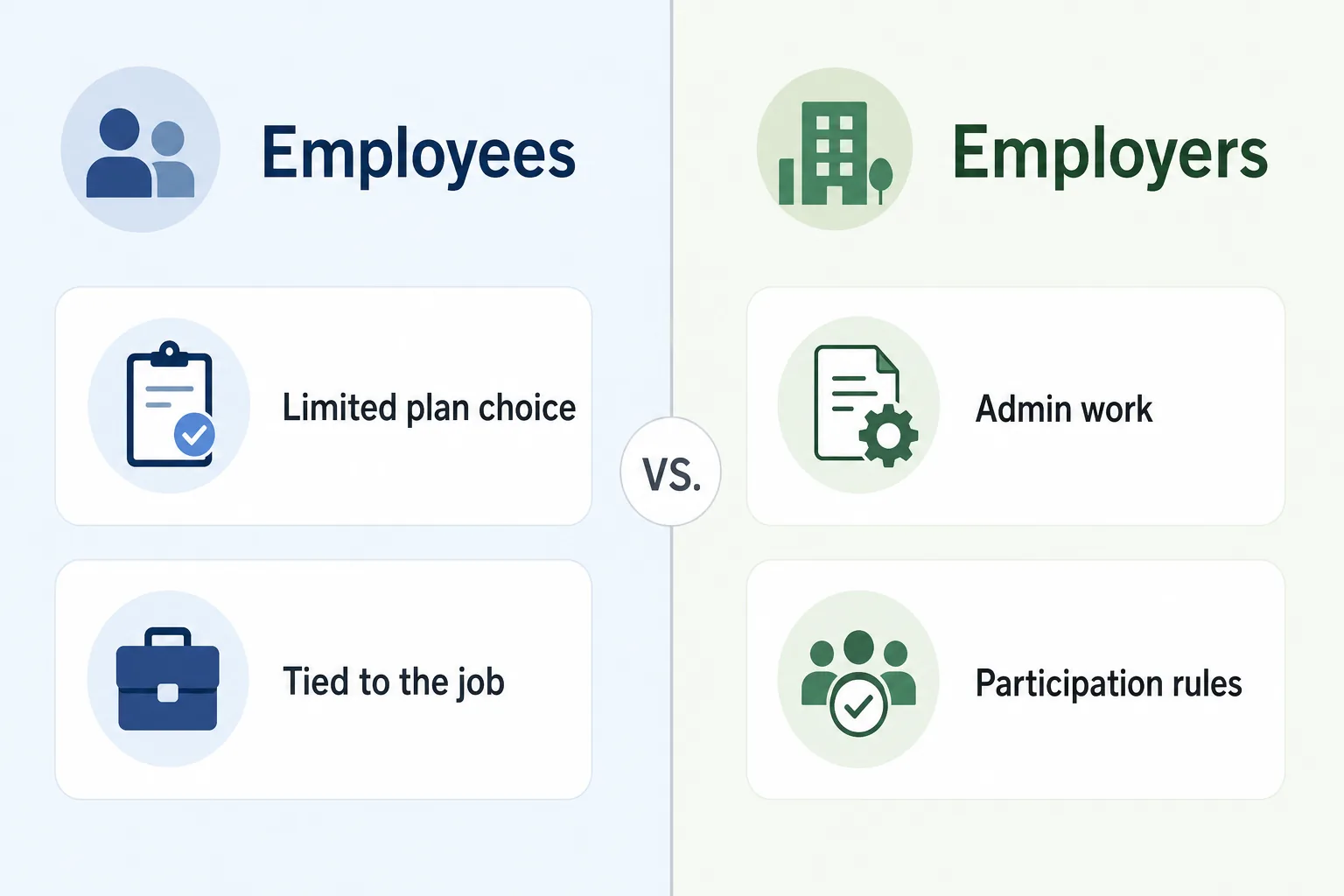
Employees get the plan you select, not the one they would have picked. Coverage typically ends when employment does. Premiums move at renewal, and a small group feels every increase sharply, since a couple of high-cost claims can shift the whole picture.
Then there is the administrative load: enrollments, terminations, billing reconciliation, and a steady stream of employee questions, all landing on whoever runs payroll. Peer-reviewed research on employer-sponsored insurance among small businesses points to the structural barriers smaller employers face in both offering and sustaining coverage.
The last two are exactly what an independent consultant absorbs. Negotiating the renewal rather than accepting it, and taking daily administration off your desk, are the difference between a plan that drains time and one that runs.
Can an LLC Get Group Health Insurance?
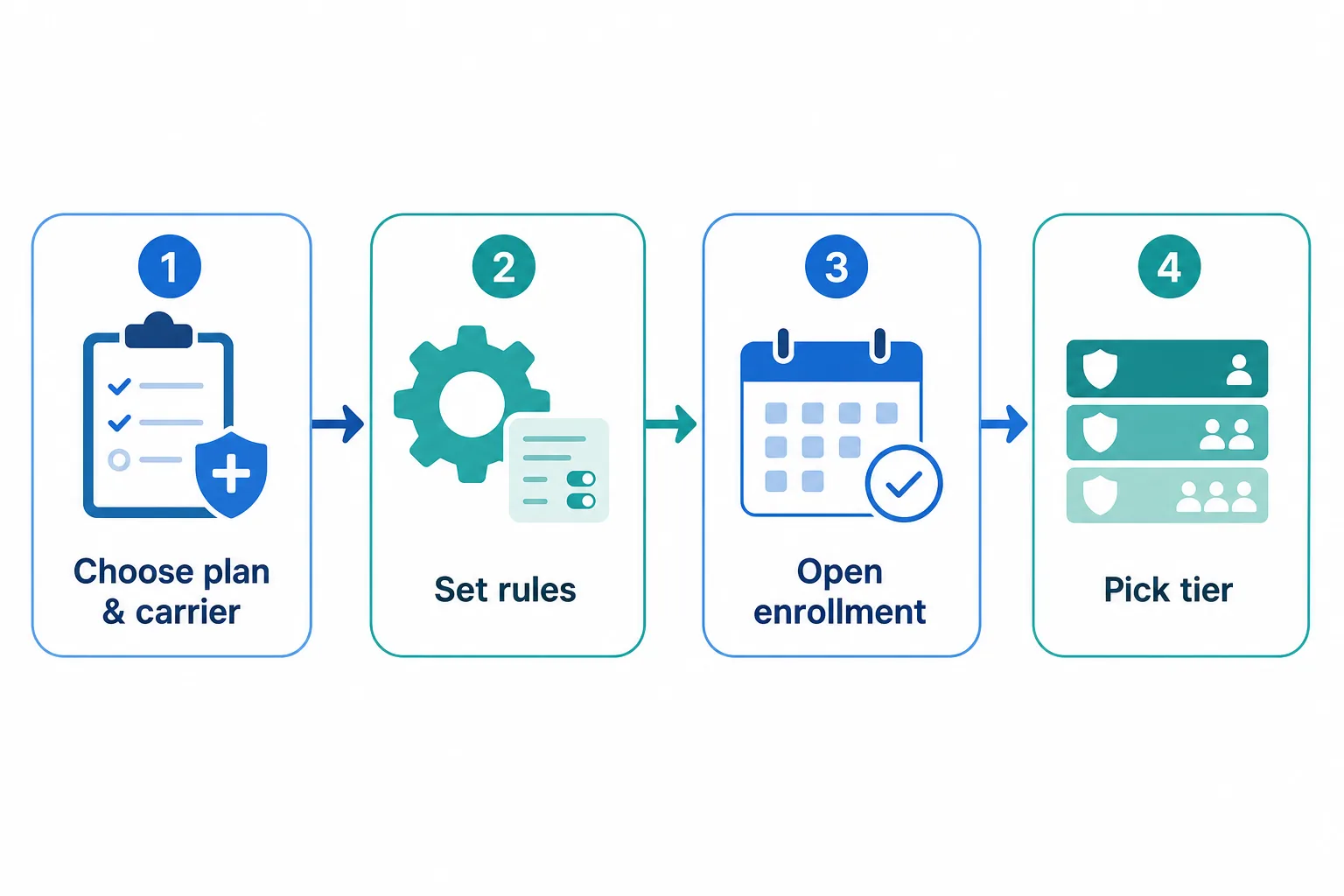
Yes. LLCs, S-corps, C-corps, and partnerships can all sponsor group plans. Your structure matters far less than having at least one qualifying W-2 employee besides the owner. Where structure does matter is how owner-employees are treated for tax and eligibility purposes. Carriers verify the business is real: payroll records, state filings, tax documents.
After the Plan Starts
Going live is the start. New hires need onboarding, ID cards get lost, claims get denied and appealed, billing statements come in wrong, and someone answers “is my doctor in network?” a few dozen times a year.
Renewal is the annual test. Rates get recalculated, plan designs shift, and a business that has grown since last year often no longer fits the plan it originally bought. Someone has to own that year-round.
FAQ
Related readingGroup Health Insurance | Cook & Associates ColoradoRead the guide →Frequently asked questions
How does group health insurance work for a small business with 2 employees?
What is the major disadvantage of group health insurance?
What is not covered in group health insurance?
Are small businesses required to offer coverage?
Let’s Look at What Your Group Qualifies For
Cook & Associates works for Colorado businesses, not for a single carrier. We compare fully insured and self-funded options across multiple providers, negotiate on your behalf, and stay involved long after the paperwork is signed, handling claims issues, billing corrections, and the employee questions that come up all year.